
Green bonds are financial instruments designed to raise funds for projects that deliver positive environmental impacts.
Key facts and trends in transportation
Transport Sector
16-18% Global GHG emissions
Including road, rail, aviation and shipping1.
Breakdown of transport emissions:
- Road transport: 72%
- Shipping: 10%
- Aviation: 11%
Emissions Trend
- Emissions have grown steadily over the past decades, approximately doubling since 1990.
Without stronger policies and technological shifts, transport emissions are projected to increase by 30-40% by 20501. - Urbanization and rising incomes in developing regions will further increase transport demand, emphasizing the need for sustainable infrastructure planning.
The road to net zero by 2050
To reach Net Zero by 2050, approximately US$2-2.5 trillion is required annually globally by 20302. This includes investment in electric vehicle infrastructure, public transport, and rail electrification. In 2024, global investment in electrified transport reached a record US$757 billion3, suggesting a shortfall of about U$1.7 trillion.

Where do green bonds fit in?
Clean Transport
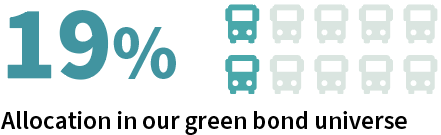
Eligible Projects Financed
- Rail network electrification and expansion
- EV charging infrastructure and battery manufacturing facilities
- Electrification of public transport fleets
- Urban transport infrastructure supporting active mobility
- Low-emission port infrastructure and shipping electrification
projects
Case study
Société des Grands Projets – A Metro for the Future
The Société des Grands Projets (SGP), a French state-owned company that provides transportation and infrastructure construction services in the Paris Metropolitan Area, is leading the change toward sustainable urban transportation. The Ile-de-France Region, incorporating the Paris Metropolitan Area, is France’s largest urban area, with a total carbon footprint of 38.5 million tonnes of CO2e, in among which 60% is related to the transport sector.
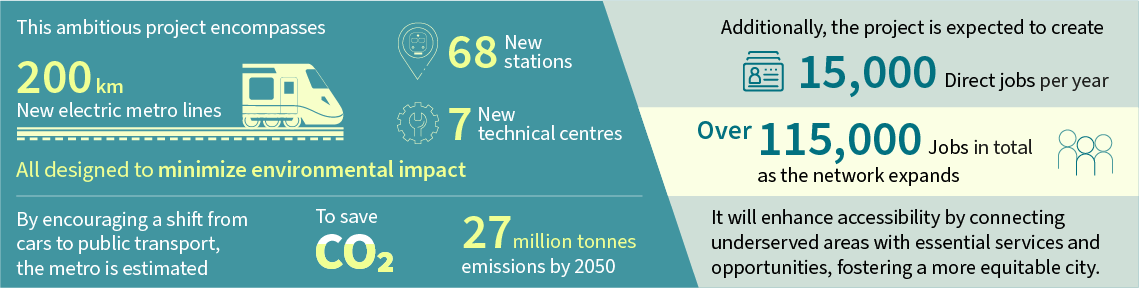
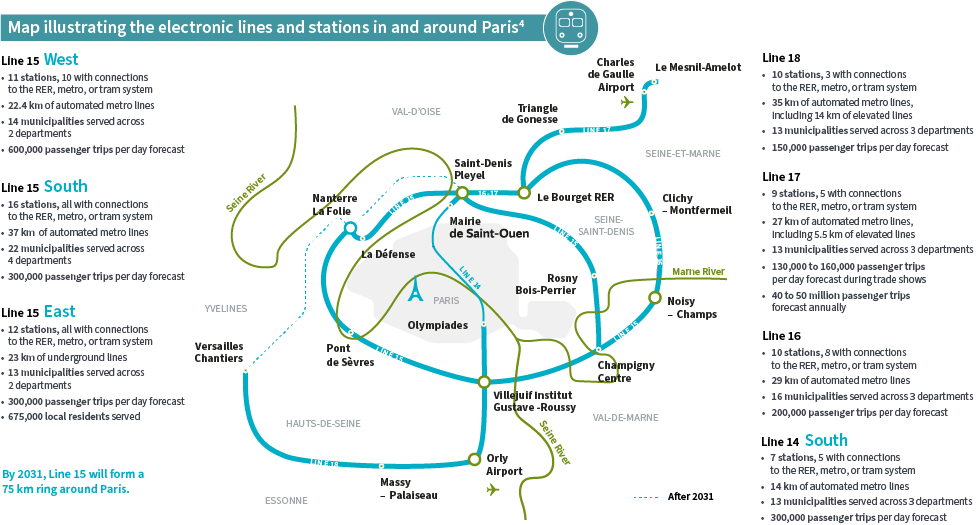
Committed to achieving net-zero emissions by 2050, SGP is constructing the Grand Paris Express—a new automated electric
metro network that represents a robust substitute for automobile use, accommodating over 2 million passengers daily. Capital expenditures related to this project and financed through the green bonds are fully aligned with the EU Taxonomy, complying
with stringent criteria.
The new metro lines will also connect underserved suburbs with job hubs, universities and hospitals, contributing to reducing geographic inequalities in public service access.
Green bonds are one of the most appropriate debt instrument to accompany issuers committed to transition to a low carbon economy. It supports the decarbonization of the energy sector by channeling capital towards projects that reduce GHG emissions and provide investors with a higher level of transparency and measurability. Contact us to explore more.
Sources:
[1]Source: IEA’s World Energy Investment 2023; IPCC AR6
[2]Source: SLOCAT Transport and Climate Change Global Status Report (2nd edition)
[3]Source: BloombergNEF report, Global Investment in the Energy Transition Exceeded US$2 Trillion for the First Time in 2024, January 30, 2025
[4]Source: Societe des Grands Projets’ Green Bond report 2023 (UK)


