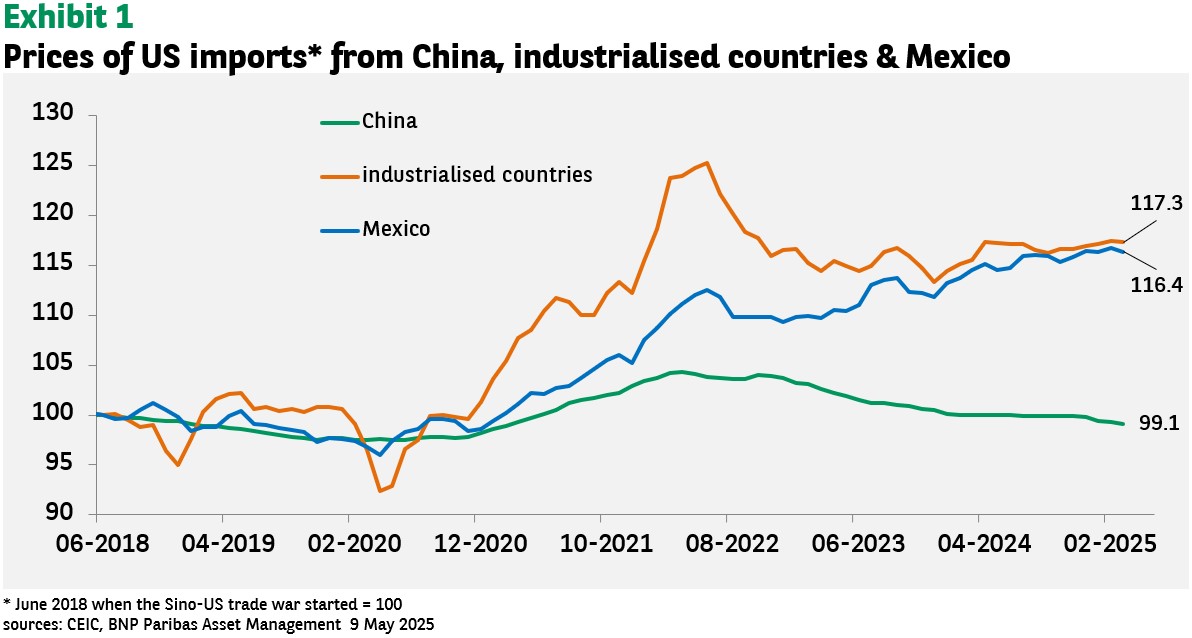
Given China’s central role in the long and sophisticated supply chains for US manufactured goods, prices of Chinese imports play a big role in US inflation data. Imposing stiff tariffs on these imports will likely boost US consumer price inflation, reversing the disinflationary effect seen since Donald Trump’s first presidency in 2018. Such an outcome could speed up efforts to ease Sino-US trade tensions.
US imports from China mostly involve capital and intermediate goods. With China a predominant supplier, these goods are difficult to replace. High tariffs will likely add to cost-push inflation in the US in the short term and could drive manufacturers to reduce supplies from China where possible.
Since 2018, Chinese import price growth has been flat, in contrast with the sharp inflation of prices of imports from other countries (see Exhibit 1). Arguably, contained Chinese import prices have been a disinflationary force in the US. That could now end.
In our view, high inflation and empty shop shelves were not among the reasons voters supported Donald Trump in last year’s elections. We believe any boost to inflation from the US tariffs on Chinese goods may well contribute to a de-escalation of the trade tensions in the coming months.