
The underperformance of eurozone government bond markets, slightly negative in the third quarter compared to +1.6% for US Treasuries (in local currency and total return terms), may reflect investor concerns over the outlook for public finances in the eurozone.
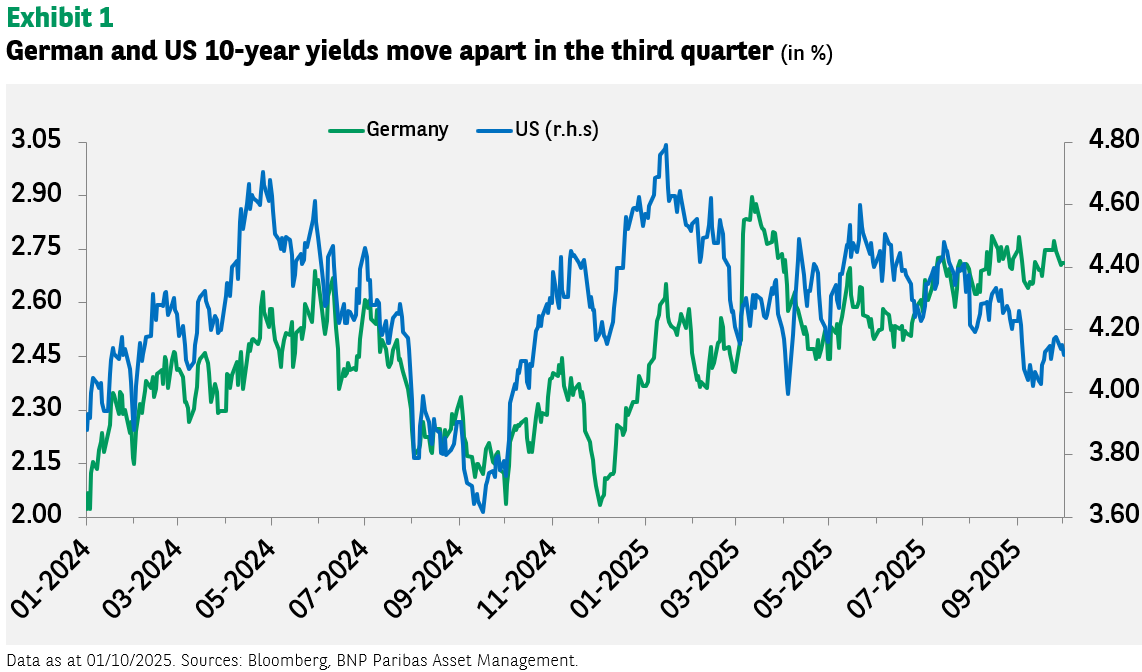
The recent approval by the Bundestag (the German lower house of parliament) of the 2025 budget reminded investors that record investments in the economy and a planned increase in defence spending will involve Germany issuing many more Bunds (government bonds).
The German Court of Auditors had raised the alarm over the budget earlier in September, describing the shape of public finances as ‘structurally dangerous’.
Elsewhere in Europe, the trajectory of public deficits and the issue of debt sustainability has also attracted attention, although there were no pronounced reactions on the financial markets.
The fall of France’s Bayrou government on 8 September and Fitch downgrading the country’s sovereign debt rating on 12 September caused the yield of the 10-year OAT government bond to rise by only 2bp to 3.53% over the month. By contrast, the Italian 10-year yield eased by 6bp to 3.53% and the 10-year Spanish yield slipped 7bp to 3.26%, while the sovereign ratings of both countries were raised.
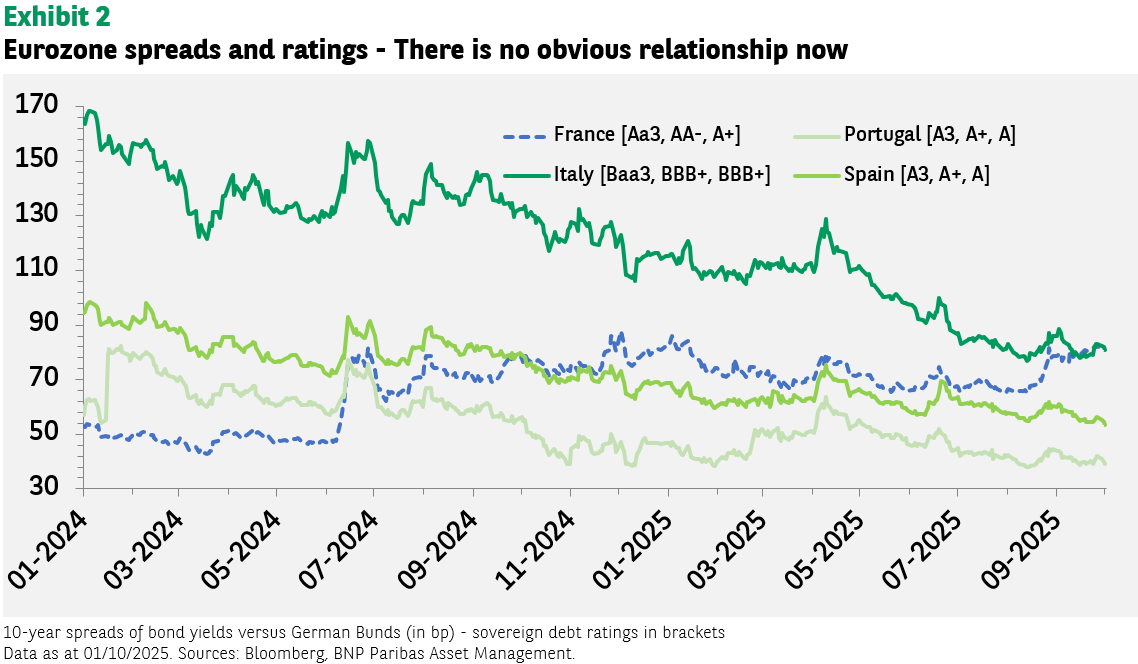
While investor concerns over the shape of public finances in Europe are largely legitimate, recent market movements suggest that current yield levels are taking into account the trajectories – favourable or unfavourable – that each country’s level of public debt has followed in recent years and any related future risks.
Please note that the source of all data in this article is Bloomberg as of 30/09/2025.


